
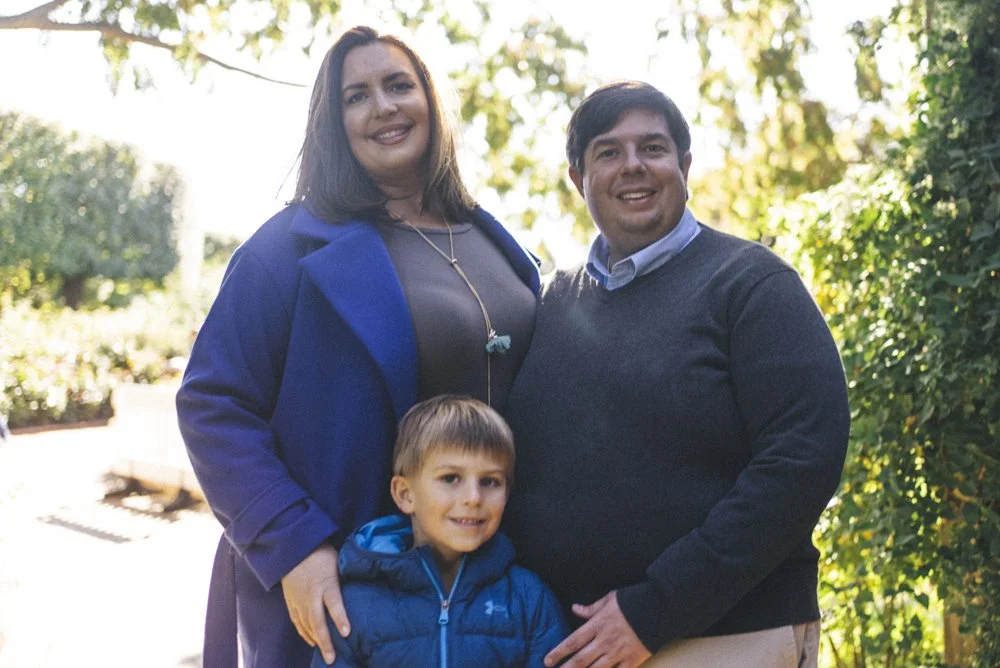
When Andy Hart's five-year-old son, Harrison, first learned his mom might have cancer, Andy did his best in the moment to explain what was happening, reaching for whatever words felt honest, even if they didn't quite land for a five-year-old. Looking back, he wishes he had simpler, steadier words.
That moment happens in living rooms and hospital hallways and car rides home from appointments across the country, whenever a parent's prognosis shifts from sick to not going to get better. Pickles Group's Chief Clinical Officer, Kelsey Mora, saw it firsthand as a hospital-based Child Life Specialist, fielding regular calls from oncology nurses and social workers who didn't know how to help a family talk to their kids. She saw it again within Pickles Group's own founding families, two of whom lost a parent to cancer within the organization's first year.
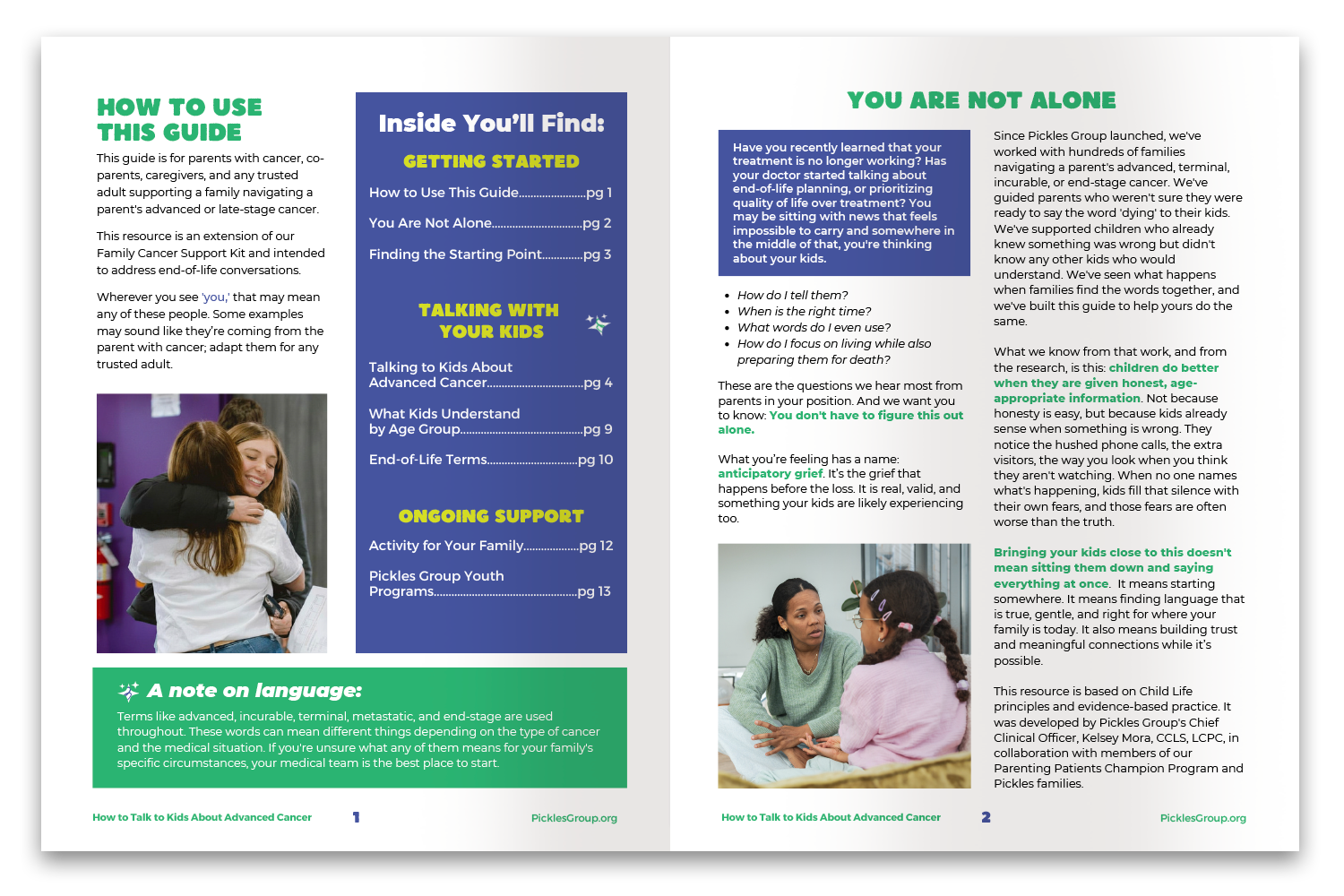
Our new resource, How to Talk to Kids About Advanced Cancer, was built to close this gap.
Even before a parent finds the words, kids are already paying attention. "Kids notice changes in their environment and caregivers before anyone says a word to them," Kelsey explains, a different routine, a parent who looks or moves differently, a shift in the emotional weight of the house. They're rarely as unaware as parents might hope. Usually, they're just curious.
What happens next matters most. "How they interpret those changes depends almost entirely on what they've already been told," Kelsey says. "It's rare that a child is completely 'clueless' that something is going on; usually they're curious. If a family has been open and honest along the way, a child tends to feel safe enough to ask questions directly, and a parent can proactively update them as things shift. But if a family has been more guarded, the child doesn't know if they're allowed to ask, so they try to make sense of it on their own — and what they imagine is often worse than the truth."
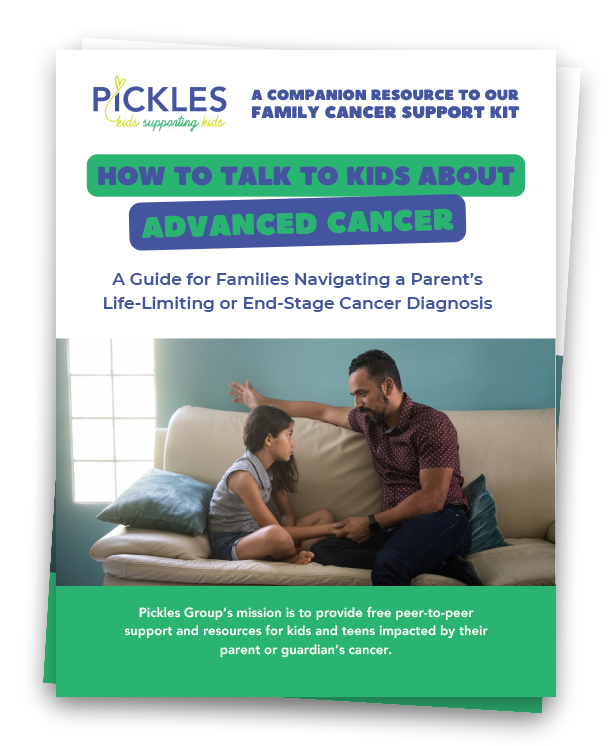
This kit follows the format of our original Family Cancer Support Kit, the resource we recommend to families just beginning to navigate a diagnosis, but goes further, with tools built specifically for advanced and terminal cancer. Inside, families will find our three core tips (Share Information, Share Expectations, Share Feelings), a child-friendly glossary, and a family activity, alongside new content for supporting kids during a hospital or hospice visit, preparing for funerals or memorial services, honoring family wishes and legacies, and thinking through the right timing for their specific family.
It's not meant to be read cover to cover before a parent feels "ready." Picture a parent who just got off a call with the oncologist, or just left a hospice meeting, and in twenty minutes their child is going to ask, at dinner, ‘Is Dad going to get better?’ This kit is built for that moment, something to flip open to whatever's needed right now. A parent can come back for the rest later, when there's more capacity.
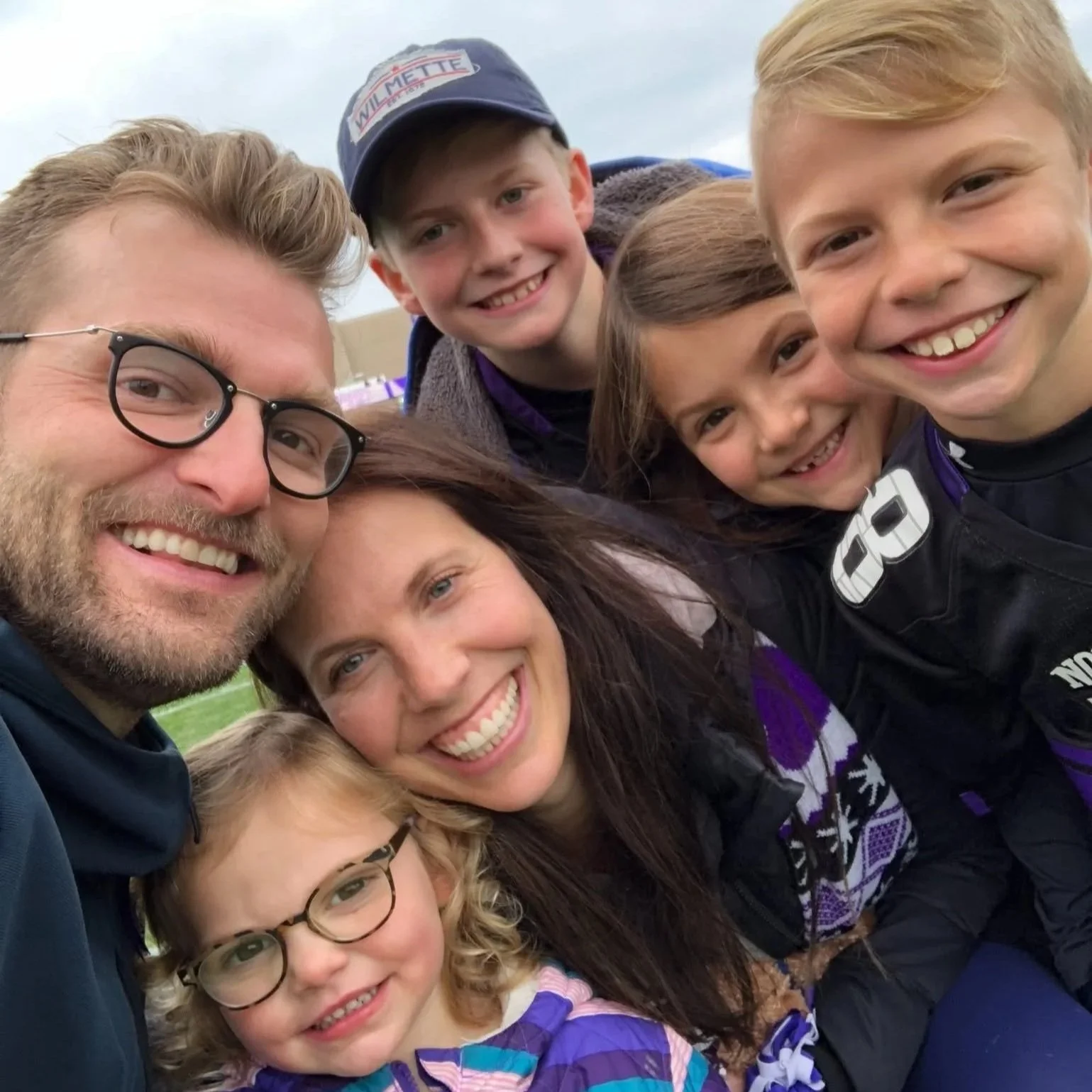
Erin Smith, a founding member of Pickles, knows what it's like to face those conversations without a guide. She and her husband, Ned, were raising their four children when a routine scan revealed his brain cancer had returned after a period of remission and hope.
"We didn't have the conversations about what my life would be like raising our four kids on my own," Erin says. "We were so consumed with getting through each day with grace and hope... that we didn't talk about our future." Ned became non-verbal within hours of deciding to stop treatment, leaving Erin to deliver the hardest news of her children's lives alone. "Having this guide... it would have felt like someone was holding our hand through it," she says.
That honesty gave Erin something she didn't expect: proof of her children's strength. "I've been able to see my kids handle extremely difficult situations with such poise and grace and courage that I don't think they would have otherwise been able to face," she says. Ned found peace in that, too. Watching his children navigate his declining mobility, a devastating recurrence, and the hardest days of his illness, he came to trust that they were capable and resilient. "It gave him some peace," Erin says, "in knowing they could handle life without him."
For Andy, whose wife Amanda was diagnosed with stage IV inflammatory breast cancer, the hardest conversations with Harrison, telling him his mom wouldn't get better, telling him she was entering hospice, were some of the most difficult of his life. "I felt lucky to have resources... to empower me to have those conversations," he says. "Nothing can make these situations easy to handle, but tools like those in the Advanced Cancer Kit reduce the burden of trying to figure it out on your own."
Kelsey, Erin, and Andy all land on the same truth: there's no perfect moment to start. If you're even thinking about these conversations, it's not too early. Using the kit now isn't about rushing anything, it's about feeling a little more ready for whenever the moment comes, even if that's a long way off. And if you're already living inside this reality, it's not too late either.
The Advanced Cancer Kit is now available for preorder. To reserve yours, register for our upcoming webinar, How to Talk to Kids About Advanced Cancer, on Tuesday, November 10, from 6:00–7:00 PM, where Kelsey will walk through what's inside the kit, answer your questions, and offer practical guidance for these conversations. Can't make it live? Register anyway, you'll still receive the kit along with a recording of the full webinar.
No parent should have to find these words alone. Register here.