

Listening to and Validating Kids' Feelings About A Parent’s Cancer
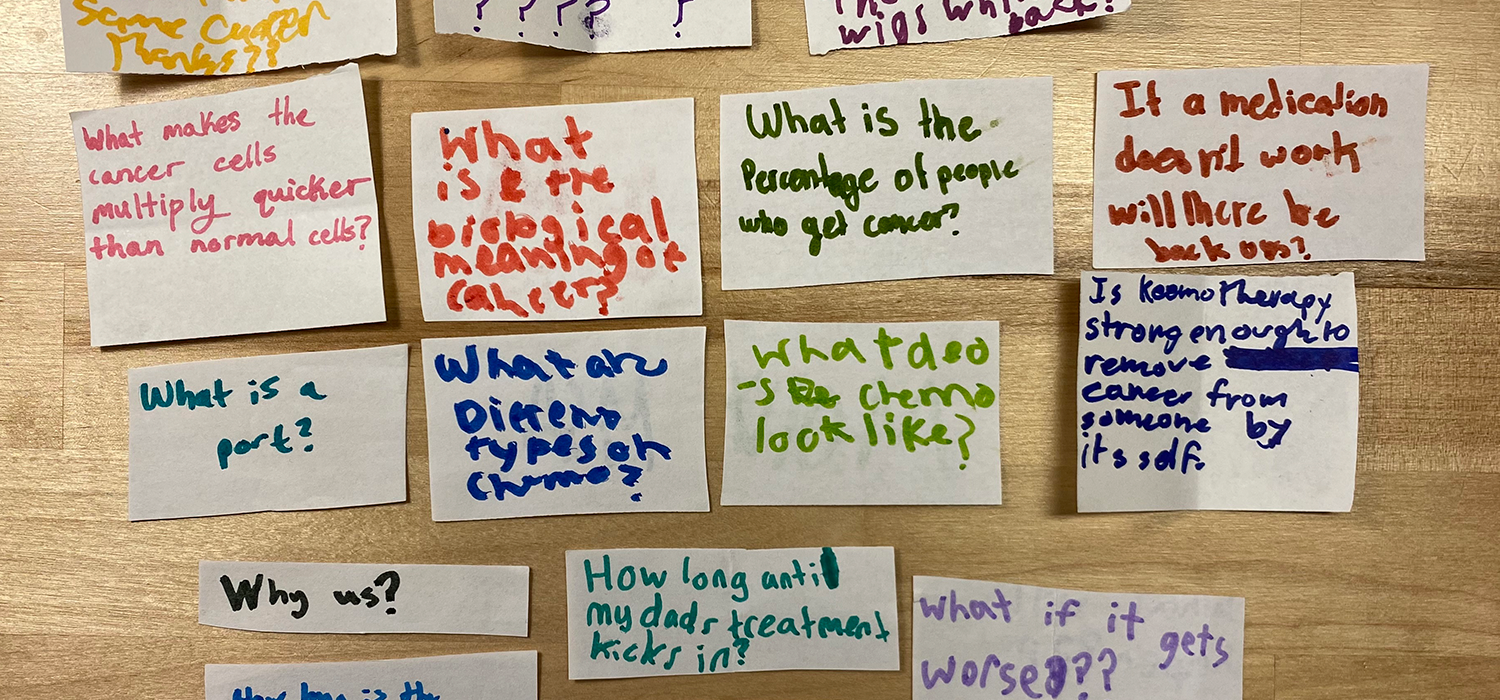
When a parent or guardian is diagnosed with cancer, kids often carry big feelings they don't know how to express. As parents and caregivers, we want so badly to fix things for our kids, to have the right words, the right answer, or the solution that makes the hard stuff go away. But at Pickles Group, we've learned something important: what kids need most isn't always a solution. It's support, especially when solutions are hard to find.
We call this approach the Pickles Way, and it's built on three simple steps: listen, validate and reassure.
Step 1: Listen First
The foundation of the Pickles Way is listening, really listening, before jumping in with anything else. Taking the time to pause and hear what your kid is thinking and feeling builds trust and connection. It shows them that it's safe to come to you with hard questions or big emotions.
It's also worth remembering that what worries you as a parent may not be what worries your child. You might expect them to be scared about a diagnosis or treatment, but instead they're upset about missing soccer practice, or disappointed that their parent can't run and play with them the way they used to. Listening first helps you tune in to what's actually on your kid's mind and it can also help you catch misconceptions. Kids sometimes believe things that simply aren't true, and listening gives you the chance to gently correct those misunderstandings.
This principle isn't just for kids, either. Listening first and truly understanding what someone else is thinking and feeling, matters in every relationship, especially during a difficult time.
Step 2: Validate
Once you've listened, the next step is to validate. Validating doesn't mean agreeing. Your child might be upset about something you feel very differently about, and that's okay, you can still validate the feeling behind it.
Validating can be as simple as saying:
- "I see you."
- "I hear you."
- "It sounds like this is really hard for you."
-”That’s important.”
It's not about having the answers or fixing the problem. It's about helping your child feel seen and heard, exactly as they are. This matters because validation gives kids permission to share or express whatever is on their mind, even the hardest, most difficult-to-say things.
Step 3: Reassure
After you've listened and validated, you can move to reassuring. Like validation, reassurance doesn't necessarily mean solving the problem. Sometimes it looks like an "I wish" statement: "I wish things were different." "I wish we weren't facing this." "I wish your dad had more energy too."
Other times, reassurance means problem-solving together. If your kid is upset they can't play with their parent the way they used to, you might say: "That sounds really hard. Let's brainstorm who are some other people you could play with that way?" or "What are some things you could do together when they're not feeling well?
And sometimes, reassurance simply means sitting with the feelings: "I know this is really hard. It might not always be this way, but it feels really hard right now and that makes sense."
We can't control the cancer diagnosis or the situation our families are facing. But we can control how supported our kids feel through it, and that has a lasting impact on their emotional well-being.
When Big Feelings Come up at Bedtime
Sometimes reassurance also means gentle redirection, especially when big emotions surface right before bed. You might say: "I'm worried these are a lot of big thoughts right before bed, and I want your body to rest. Can we write them down and talk about them later? I care about these thoughts and feelings, but I want to make sure they're helpful to you, not making it harder to sleep, rest, or relax."
This is where coping skills come in: deep breathing, movement, writing, dancing, listening to music, jumping jacks, or even meditation. Everyone copes differently, and part of supporting your kid is helping them find the space and tools to work through hard feelings, even after you've already listened and validated.
Bringing the Pickles Way Home
Listen. Validate. Reassure. It's a simple rhythm, but it can make a profound difference in how a child processes a parent's cancer diagnosis. You don't need the perfect words or a perfect solution, you just need to show up, tune in, and let your kid know they're not alone in what they're feeling.
If you're looking for more tools to help guide these conversations at home, our Family Cancer Support Kit was built for exactly this. It includes a how-to guide with age-appropriate language for talking about cancer, a family resource library, and an interactive family activity, all designed to reinforce the Pickles Way and support your family every step of the way.